
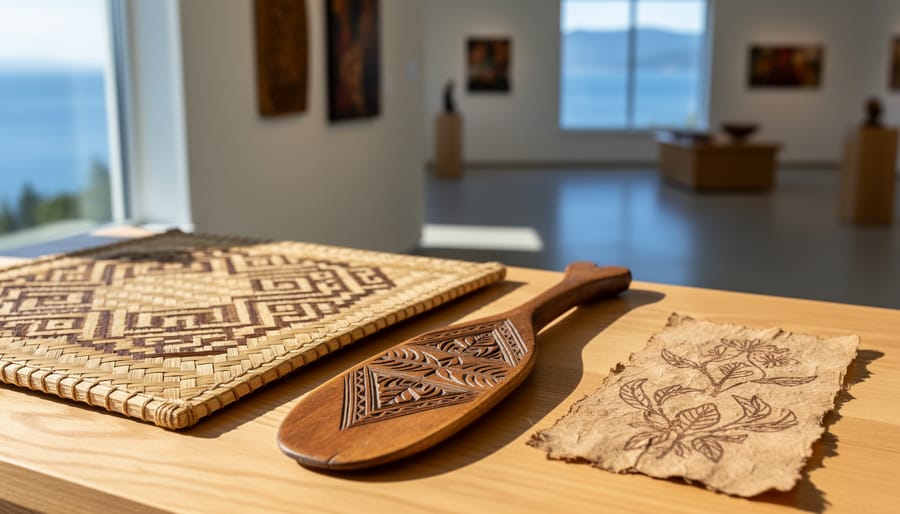
Guide to Pacific Islanders Art at Arts Pacific Gallery on Bowen Island: What to See, Practical Information, and Local Tips
Pacific Islanders art is the visual and material culture of the peoples of Polynesia, Melanesia, and Micronesia, expressed through carving, weaving, tattoo, bark cloth, jewelry, and painting. On Bowen Island, the easiest place to meet it in person is Arts Pacific Gallery, where these traditions are shown as living practices, not museum relics.
What makes the art so compelling is how much of it is made to be used, worn, and passed along. A woven mat might mark a wedding. A carved paddle can carry the story of a family’s voyages. Patterns repeat across generations, each design holding meaning about ancestry, ocean, land, and community. Once you know a little of the language, a single piece can read like a short chapter of history.
You don’t need any background to enjoy it. Come curious, take your time, and ask questions. This guide covers the main art forms to look for, what to expect from a gallery visit, and a few practical tips for fitting it into a day on Bowen Island. We’ll also touch on how to appreciate and buy this work respectfully, so what you take home honors the people who made it.
Why Pacific Islanders Art Belongs on Your Bowen Island Itinerary
Pacific Islanders are the peoples of Polynesia, Melanesia, and Micronesia, three vast regions of the Pacific Ocean, each with its own languages, customs, and artistic traditions. When you step into a gallery that celebrates this art on Bowen Island, you’re looking at a whole spectrum of making, from carved wood to woven fibre to bark cloth.
Part of the appeal is the setting. Bowen is a small island on the Pacific coast, and the ocean is never far from view. That sits well with art that so often draws on the sea, whether through canoe motifs, wave patterns, or stories of voyaging and migration. Seeing these works with salt air outside the door gives them a context you won’t get in a big-city museum.
It also fits Bowen’s identity. This is an island with a strong creative community, where galleries, studios, and local makers are part of everyday life. Arts Pacific Gallery adds a global thread to that tapestry while keeping the same unhurried, personal feel.
For adults and families alike, it makes an easy, enriching stop. Kids can spot animals, faces, and patterns in carved and woven pieces, while grown-ups can dig into the stories behind them. Because so much Pacific art is tied to ancestry, community, and place, a little curiosity goes a long way. Ask questions, look closely, and treat each piece with respect.
Best of all, it slots neatly into a full day out. After browsing, you can linger over a coffee or lunch, and our guide to Bowen Island dining will help you find a good spot nearby.
Art Forms to Look For: A Guide to Pacific Islanders Art
1. Wood Carving and Sculpture
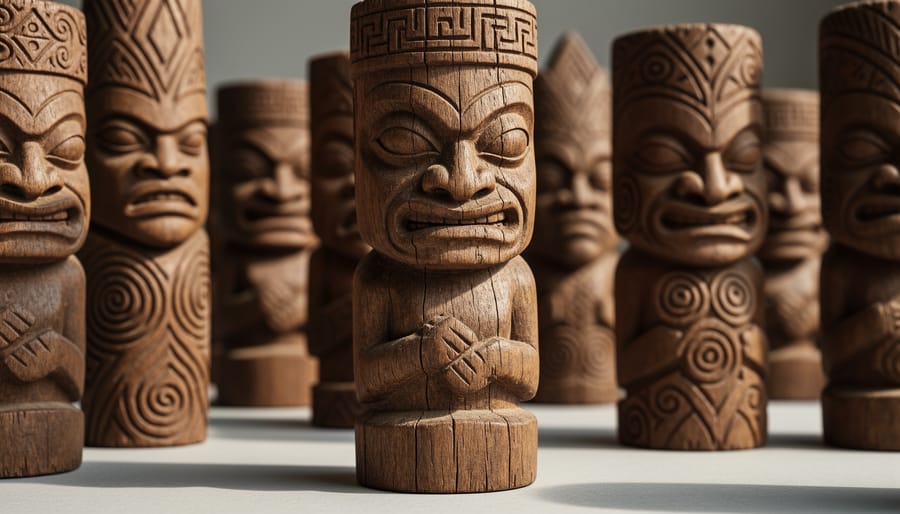
Across the Pacific, carving is one of the oldest ways of keeping a story alive. In Polynesia, Melanesia and Micronesia, artists have long shaped wood into figures, masks, bowls, house posts and ceremonial objects that hold the memory of ancestors, spirits and place. A single figure might represent a revered forebear, a guardian, or an episode from a clan’s history, so the object is as much a record as it is a sculpture.
When you stand in front of a piece, slow down and look closely. Notice the repeating patterns and symbols cut into the surface, since they often carry meaning tied to lineage or the sea. Look at how the face and limbs are proportioned, and whether the wood has been polished smooth, left tool-marked, or darkened with natural pigments. Those small choices reveal the maker’s hand and the tradition behind it.
2. Tapa and Bark Cloth Art
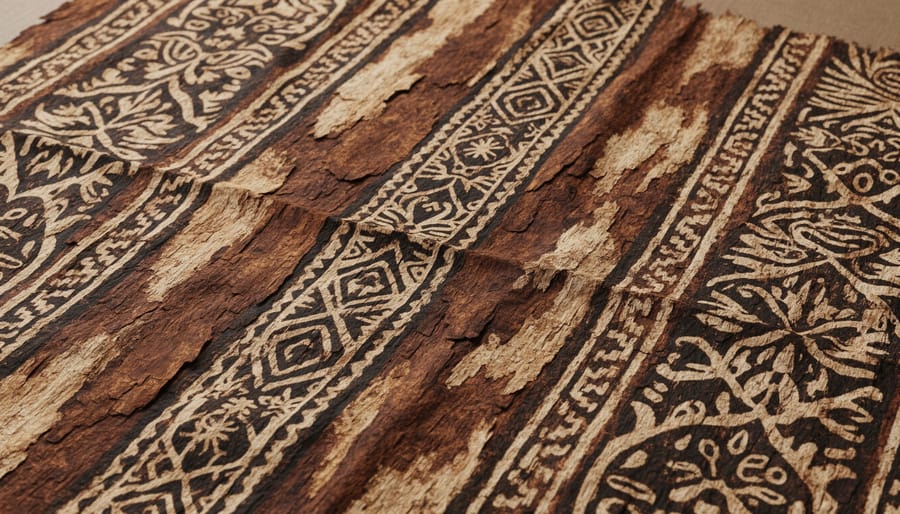
Tapa is cloth made by soaking and beating the inner bark of trees, most often the paper mulberry, until the fibres spread into a thin, felt-like sheet. You’ll hear it called siapo in Samoa, masi in Fiji, ngatu in Tonga and kapa in Hawai’i, and each island group has its own methods and visual language.
Look closely at the surface. Many pieces carry bold geometric patterns, such as repeating triangles, stripes and diamonds, while others echo the natural world through leaves, fish, waves and flowers. Earthy browns, blacks and rusty reds come from plant-based dyes and pigments, which gives the cloth its warm, grounded look.
Tapa is far more than decoration. It is traditionally exchanged as a gift and presented at weddings, funerals and other ceremonies, and large lengths can mark status and family ties. If a piece is on display, take a moment to notice the hand-pressed texture and subtle variations in the pattern.
3. Tattoo-Inspired Patterns and Symbolic Design
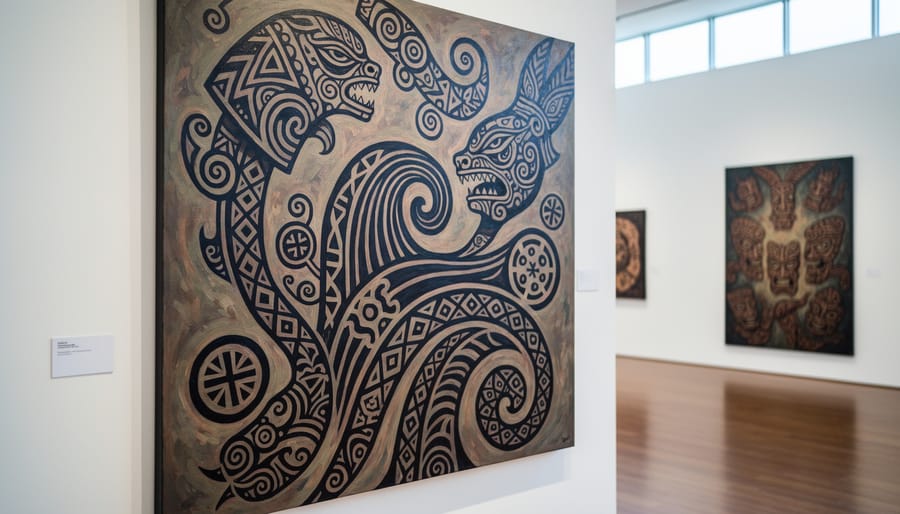
Traditional Pacific tattoo is one of the oldest visual languages in the region. In Samoa, the pe’a, worn by men, and the malu, worn by women, wrap the body in patterns that mark rank, family and service. In Aotearoa New Zealand, ta moko is carved into the skin as a record of whakapapa, or genealogy. If you want a closer look at how these designs are read, this overview of Samoan tattoo meanings is a helpful start.
In a gallery, you may see these motifs reworked in paintings, prints and carved pieces, with repeating waves, spearheads and spirals standing in for whole stories. Look for the rhythm and balance of the lines. Keep in mind that many of these designs belong to particular people and families, so admire them as living culture, and ask the gallery before photographing or copying a pattern.
4. Weaving and Fibre Arts
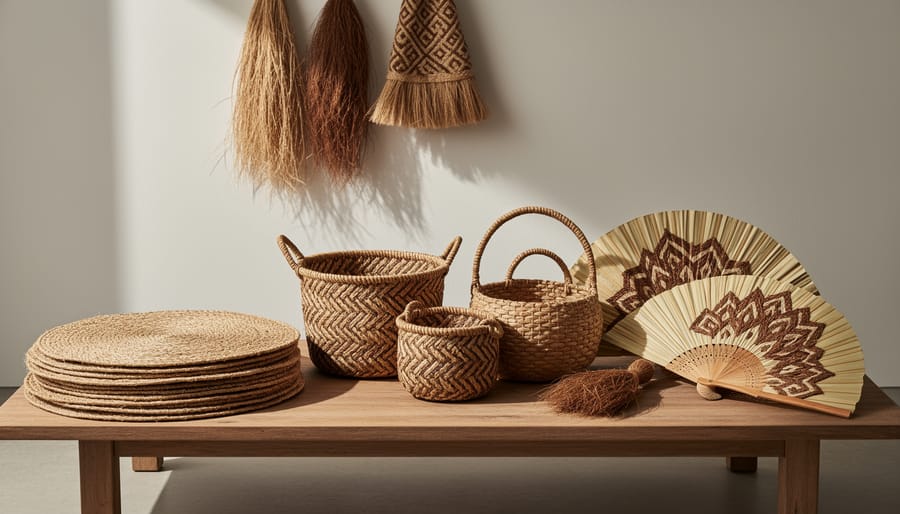
Weaving is one of the most widely practised arts across the Pacific, and it often hides in plain sight. Look for mats, baskets and fans made from pandanus leaves or coconut fibre, materials that islanders have relied on for generations. Pandanus leaves are harvested, stripped, boiled and dried before being split into fine strands. Weavers then work them by hand into patterns that can take weeks to finish. Coconut fibre, twisted into cord, is used for lashing, bags and decorative bindings.
When viewing a piece, notice the evenness of the weave, the edges, and any dyed or contrasting strands that form geometric motifs. Fine mats are often given at weddings, births and other gatherings, so they carry social meaning as well as beauty.
Traditional making is naturally low-impact. Leaves are taken without felling the plant, and little goes to waste. Ask the gallery about the weaver and the materials behind any piece.
5. Shell, Bone, and Greenstone Jewellery
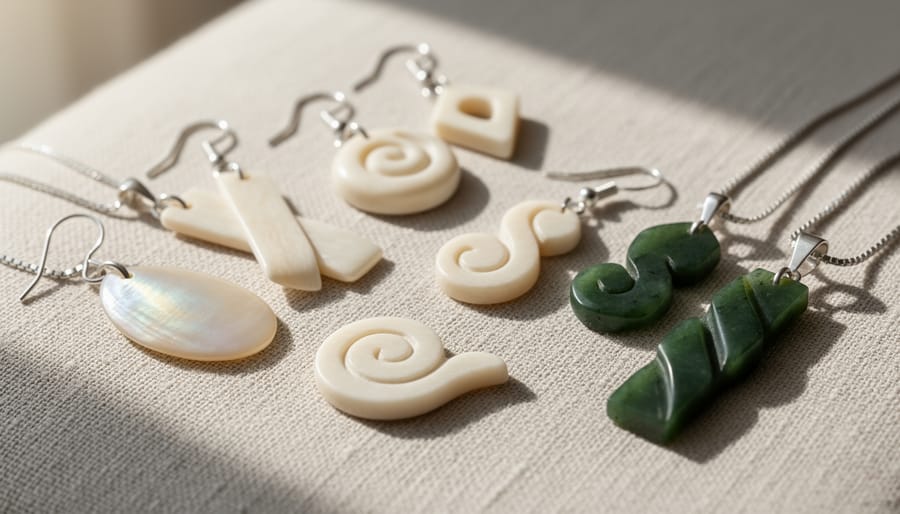
Wearable art is some of the most personal Pacific work you’ll come across, and it’s often small enough to carry home in a pocket. Makers shape shell, bone, and pounamu (the prized New Zealand greenstone) into pendants, earrings, and necklaces, each smoothed by hand until the material glows.
Notice the shapes, because they carry meaning. The fish hook, often called hei matau in Māori tradition, is commonly associated with prosperity, strength, and safe travel over water. The spiral can suggest growth and new beginnings, while a twist often speaks of connection between people.
What makes a piece a meaningful keepsake? Ask who made it, what the material is, and what the design represents. Greenstone and carved bone are traditionally treated as personal, so many people value pieces that arrive with a story rather than a price tag alone.
6. Contemporary Pacific Painting and Printmaking
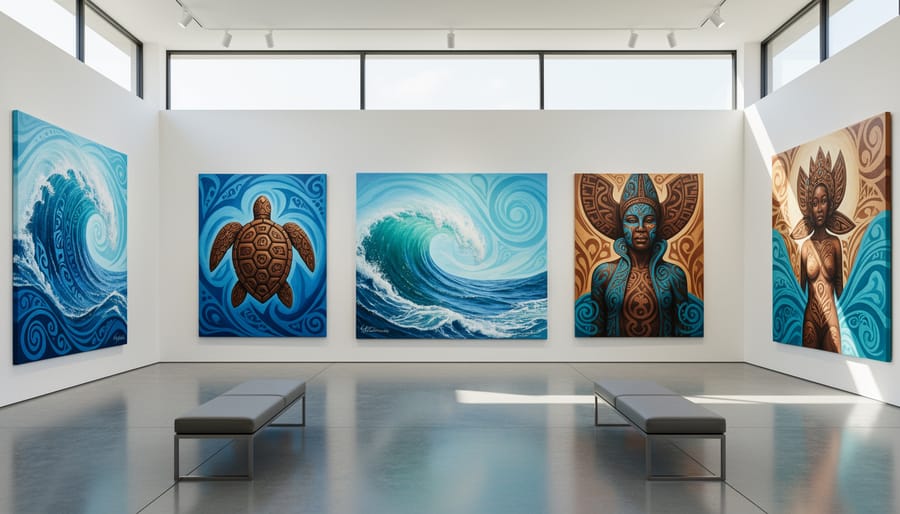
Pacific art isn’t frozen in the past. Today’s artists across Polynesia, Melanesia, and Micronesia, along with those in diaspora communities, are painting and printing with acrylics, screen-printing inks, and linocut blocks while still drawing on ancestral patterns. A koru spiral or a tapa-inspired border might sit beside bold colour fields or abstract layering, so old and new share the same canvas.
Look for recurring themes. The ocean appears as a road, a home, and a source of memory. Migration shows up in journeys across water, and in stories of families who carry traditions to new shores. Identity runs through nearly everything, often expressed through symbols that tie a maker to place and lineage.
On Bowen Island, these works feel right at home. Pacific Northwest coastal art has its own deep tradition of art rooted in water, ancestry, and story, so the conversation between the two is easy to sense. Take a moment with each piece, and ask the gallery about the artist behind it.
7. Carved Ocean-Themed Pieces and Everyday Artisan Goods
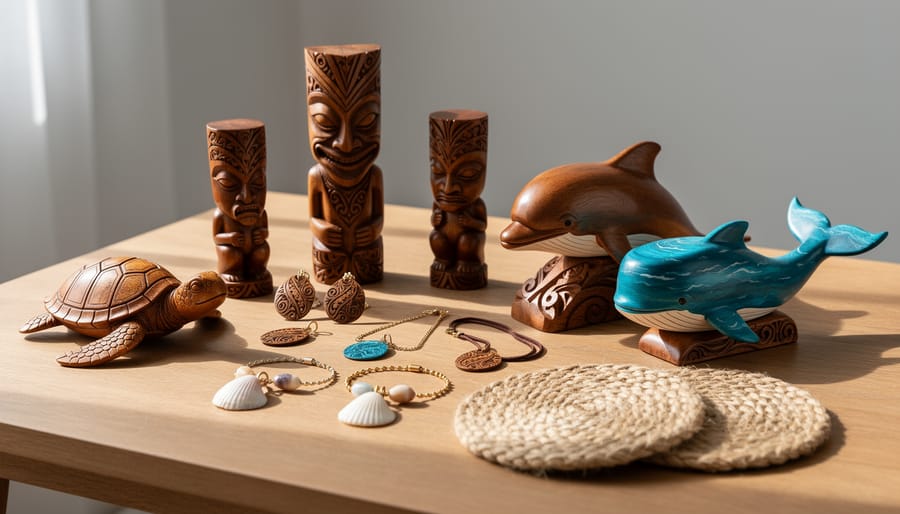
Not every piece worth taking home needs a gallery wall. Smaller works, like carved paddles, canoe and wave motifs, and artisan-made home goods, give you a way to bring a bit of the Pacific back with you. Look for clean carving, a smooth finish, and motifs that feel intentional rather than stamped on. A good piece should tell you something about the ocean, travel, or the people who made it.
When you’re choosing, ask who made the piece, what it’s made from, and where the materials came from. Honest answers about the maker and the materials are a good sign of authenticity. Prices that seem too low for hand-carved work can mean mass production, so a thoughtful question or two goes a long way.
Here’s a quick reference to everything covered above, handy to have on your phone while you browse:
| Art form | Typical materials | What to notice |
|---|---|---|
| Wood carving and sculpture | Hardwoods | Symbols, patterns, finish |
| Tapa and bark cloth | Beaten tree bark | Geometric and natural motifs |
| Tattoo-inspired design | Paint, ink, carved line | Repeating patterns and their meaning |
| Weaving and fibre arts | Pandanus, coconut fibre | Tight, even weave |
| Shell, bone, greenstone jewellery | Shell, bone, pounamu | Shape meaning, polish |
| Contemporary painting and prints | Paint, ink, paper | Ocean and identity themes |
| Carved ocean pieces and artisan goods | Wood, natural finishes | Wave and canoe motifs, maker details |
Practical Information for Visiting Arts Pacific Gallery
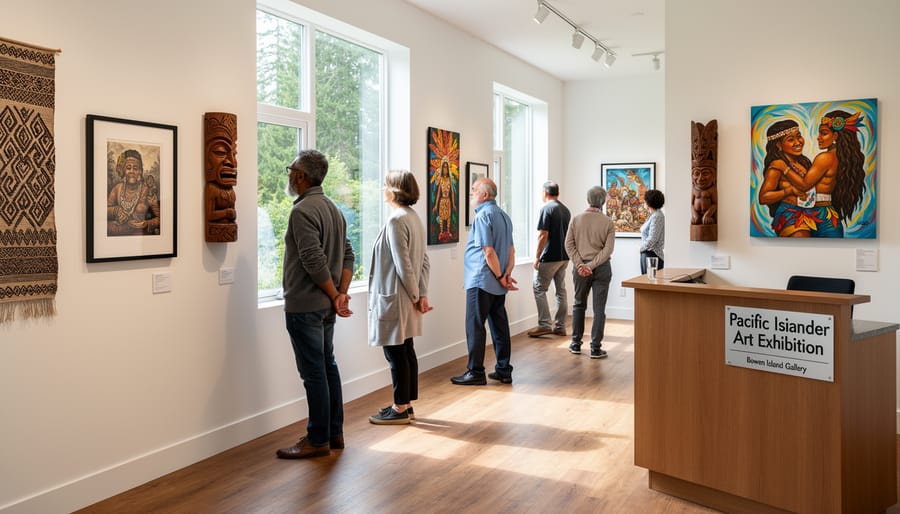
Getting to Arts Pacific Gallery is part of the charm. Bowen Island is reached by BC Ferries from Horseshoe Bay in West Vancouver, and the crossing takes about 20 minutes, just long enough to watch the mainland shrink behind you and the island’s forested hills take shape ahead. Once you arrive, you can walk, drive, or use island transit, and our guide on how to get around explains how the island’s layout shapes each option. Many visitors leave the car behind and enjoy the unhurried pace on foot, though distances and hills are worth considering if you’re traveling with children or limited mobility.
Opening times and exhibitions can change with the season, so please confirm details with the gallery directly rather than relying on a general guide. The same goes for ferry schedules, which vary by day and time of year.
Before you set out, it helps to confirm:
- The current BC Ferries sailing times for your travel day.
- The gallery’s opening hours and any seasonal changes.
- Which exhibitions or works are currently on view.
- Your plan for parking, walking, or island transit.
- Nearby lodging options if you’d like to stay overnight.
Plan on an hour or so to look slowly and chat with staff, longer if you want to pair the visit with a stroll or a meal. If you’re making a weekend of it, booking nearby accommodation early gives you a calm, flexible start to the next day.
Local Tips for Making the Most of Your Visit
Slow down. Arts Pacific Gallery rewards unhurried looking, so give yourself time to circle a piece, notice the carving, the weave, the pattern, and let it settle. Rushing a small island gallery on your way to the ferry misses the point of being on island time.
Talk to the people behind the counter. The staff can often tell you about the makers, the materials, and what a particular motif means, and those conversations are usually the highlight of the visit.
If you’re buying, choose authentic, artist-made work. It supports the makers directly, and it tends to favour traditional, sustainable materials and methods over mass-produced imitations. A shell pendant or woven piece with a known origin makes a far more meaningful keepsake.
Respect goes a long way here. Many Pacific designs, especially tattoo-inspired patterns, carry personal and ancestral meaning, so ask before photographing a piece and take a moment to learn what the symbols represent.
Pair your visit with time outdoors. Bowen is a wonderful place to hike or cycle, and the island is known for CBD-enhanced hiking, guided walks where a little hemp-derived CBD is part of the relaxed, mindful pace. Study the Bowen Island map to plan a loop that suits your energy, then refuel afterwards at U Cafe Bar.
Finally, bring a reusable bag. It keeps the day low-impact and gives your new treasures a safe ride home.
Frequently Asked Questions About Pacific Islanders Art on Bowen Island
What kinds of Pacific Islanders art can I expect at Arts Pacific Gallery?
Think carved, woven, painted, and textile-based work from across Polynesia, Melanesia, and Micronesia. Availability changes, so ask the gallery what’s on view right now.
Is the gallery suitable for families?
Generally, yes. It’s a calm, small-scale space where kids can look closely at patterns and materials, though it’s wise to remind little ones to look with their eyes rather than their hands.
How do I get to Bowen Island from Vancouver?
Take BC Ferries from Horseshoe Bay, a crossing of about 20 minutes. Check current sailing times before you head out.
How can I tell if a piece is authentic?
Ask who made it, where, and with what materials. A good gallery will happily share the maker’s story and the cultural meaning behind the work.
And yes, you can easily pair a gallery visit with time outdoors. Bowen is made for it, from forest trails to quiet shoreline walks, so plan a slow morning among the art and an afternoon on the paths. For current exhibitions and hours, the gallery itself is your best source.
A visit to Arts Pacific Gallery is more than a quick browse. It’s a chance to slow down and spend time with art shaped by ocean, ancestry, and the hands that made it. Ask about the stories behind a carving or a woven piece, and let the answers shape how you see everything else on the island.
If something speaks to you, take it home. A thoughtfully chosen, artist-made work carries a place and a people with it long after the ferry ride back.
So plan the day, or better yet the weekend. Catch the sailing from Horseshoe Bay, book a stay on Bowen, and leave room for trails, quiet shoreline, and an unhurried afternoon among the art.
